
Discover the time-tested techniques behind quality woodwork and how skilled craftsmanship brings greater character, strength, and detail to every piece. In a world of advanced machinery and automated production, traditional woodworking techniques continue to hold a special place in fine craftsmanship. These time-tested methods combine precision, patience, and a deep understanding of natural wood to create pieces that are built to last.
While modern technology has made woodworking more efficient, traditional techniques still provide the detail, character, and authenticity that distinguish exceptional furniture and interiors. Traditional woodworking methods continue to influence contemporary design because they offer more than historical value. They provide proven approaches to strength, durability, proportion, and beauty.
“Great woodwork does more than fill a space — it brings warmth, character, craftsmanship, and lasting beauty into the way you live.”
1. Mortise and Tenon Joinery
One of the most respected woodworking joints, the mortise and tenon connects two pieces of wood through a carefully shaped projection and corresponding opening.
2. Dovetail Joinery
Recognized for its distinctive interlocking shape, dovetail joinery provides both strength and visual appeal. It is particularly common in drawers, cabinets, and fine furniture. When carefully crafted, dovetail joints demonstrate the precision and skill of the maker while creating a highly durable connection.
3. Tongue-and-Groove Construction
Tongue-and-groove joints connect wooden boards by fitting a projecting edge into a corresponding groove. This technique creates a clean connection and is often used for flooring, wall panels, cabinetry, doors, and other applications where a seamless appearance is important.
4. Hand Planing and Shaping
Before modern machinery, craftsmen relied heavily on hand planes, chisels, saws, and other tools to shape timber. Hand planing remains valuable today because it allows craftsmen to refine surfaces carefully and respond to the unique characteristics of each piece of wood.
5. Wood Carving
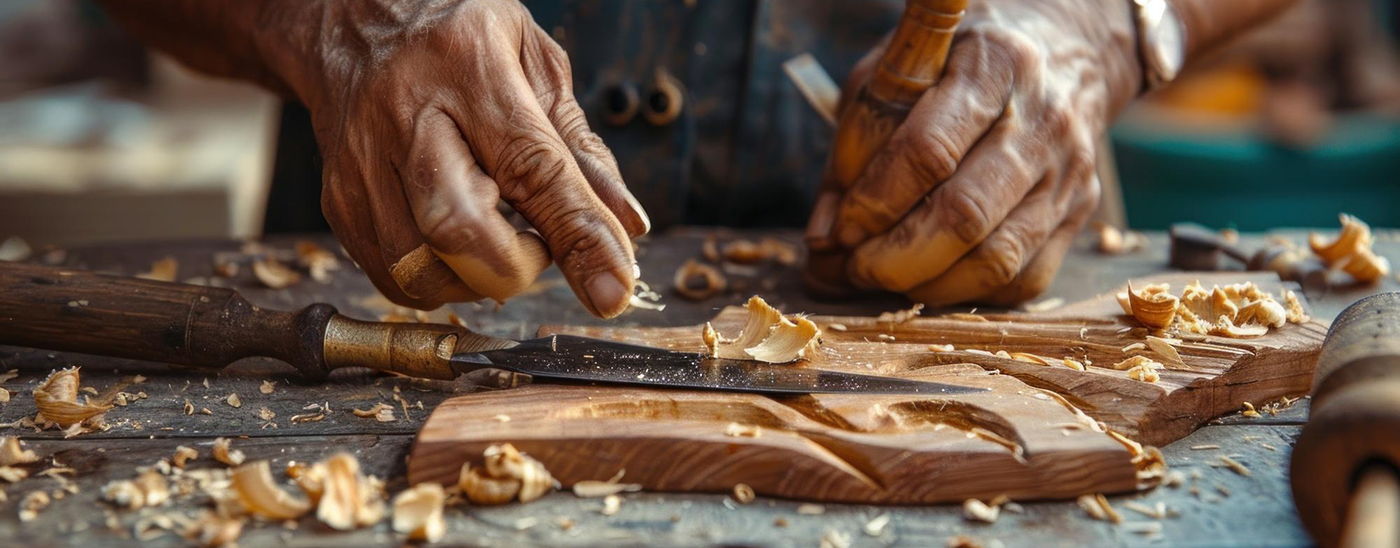
Wood carving transforms timber into decorative patterns, profiles, and intricate details. From subtle decorative elements to highly detailed artistic work, carving adds individuality to furniture and interiors. The technique requires patience and an understanding of how the grain responds to different tools.
6. Traditional Peg and Dowel Construction
Wooden pegs and dowels can be used to reinforce joints without relying heavily on modern fasteners. These techniques provide structural strength while maintaining the natural appearance of the finished piece. They also reflect the resourcefulness and precision of traditional furniture making.
7. Steam Bending
Steam bending involves carefully heating wood with steam so it becomes flexible enough to form into curves. Once shaped and dried, the timber retains its curved form. This technique allows craftsmen to create elegant silhouettes for chairs, furniture components, and architectural features.